


Floor drain
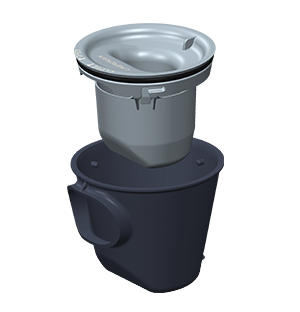
The floor drain is now Linerdrain. Installing the Linerdrain floor drain developed by Linercom is easy and convenient. The new plastic floor drain is installed inside the old drain, and there is no need to break waterproofing membranes or surfaces during installation. Savings are achieved both in time and costs compared to traditional methods, in which the old drain is chiselled open while damaging the surfaces. Coating the drains, on the other hand, leaves a significant risk in the structures.
By using the Linerdrain floor drain, the pipeline renovation can be carried out seamlessly all the way from the floor drain to the yard manhole. The plastic floor drain has no sharp corners or edges that collect dirt, so keeping it clean is also very easy and hygienic.
The plastic floor drain is a fully Finnish patented product. Finnish Patent and Registration Office patent No. 11063 and registered Community design (RCD) registration number 002842799-0001.
VTT has carried out flow measurements on the floor drain in accordance with standard SFS-EN 1253-2.
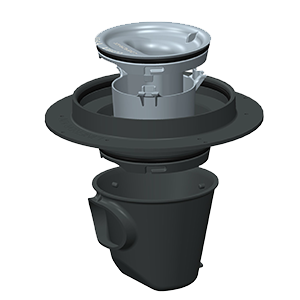
For sites where a Linerdrain floor drain has been installed, a Linerdrain raising ring is available in connection with future bathroom renovations. The surface structures are dismantled down to the level of the old cast-iron drain and the raising ring is turned into place on the Linerdrain floor drain previously installed during lining. Standard waterproofing flanges available on the market and raising rings with side connections fit directly into the Linerdrain raising ring.
The Linerdrain raising ring is a registered Community design (RCD) with registration numbers 003095660-0001 and 003095660-0002.
VTT has carried out a tightness test on the raising ring in accordance with standard SFS-EN 1253-1.
All files and forms are in finnish.
Raising ring
Side connections of the raising ring

Regular maintenance and upkeep of the floor drain are important to ensure its efficient operation and to prevent odour problems and blockages. Here are some tips for proper care of the floor drain:
- Cleaning:
- Remove the floor drain grille or cover and check that it is free of debris, hair and other substances that cause blockages.
- Clean the grille or cover thoroughly, removing all dirt and soap residues. You can use a brush or a cotton swab for cleaning.
- Avoiding chemicals:
- Avoid using strong chemicals such as acids or solvents when cleaning the floor drain. They can damage the pipelines and seals.
- Checking the water seal:
- Regularly check the water seal and make sure it is not dry. If the water seal is dry, it can let unpleasant odours into the interior.
- Collecting hair and debris:
- Use a hair catcher or strainer to prevent hair and other large debris from entering the floor drain. These can prevent blockages and make cleaning easier.
- Regular inspection:
- Inspect the floor drain regularly, especially in spaces where it is exposed to large amounts of water, such as bathrooms. If you notice blockages or other problems, take action to remove them promptly.
With these tips you can maintain the floor drain efficiently and prevent possible problems. Careful maintenance helps preserve the functionality of the drainage system and ensure a healthy indoor environment.